
A buyer tours a house with you on Saturday, decides the price is too high, and three months later closes on it through another agent. Whether you get paid now depends on two pieces of paper: the agreement you had the buyer sign before the showing, and the listing agreement behind it.
Since August 2024, that first piece of paper is no longer optional for most agents. A touring agreement is the shortest form of written buyer agreement, and many agents treat it as a box to check at the front door. This guide covers what it must contain, what it proves if a deal goes sideways, and how to turn it into the first step of your buyer follow-up.
What you'll learn in this guide:
- What NAR's practice changes require before a showing, and what they don't cover
- The clauses every touring agreement needs, with a sample layout
- Why the clause that protects you from the seller lives in the exclusive listing agreement, not the touring agreement
- What buyer data to collect, and what to leave out
- How the agreement feeds seller feedback reports and buyer follow-up
Touring agreement: definition and purpose
A touring agreement is a short written agreement between a buyer and the agent who shows them homes. It sets out the scope of the relationship (one property, one day, one area), how long it lasts, and what the agent will be paid. It is signed before the first tour, on paper or on a phone.
It does three jobs, from the most talked about to the most neglected:
- Compliance before the showing. For MLS participants working with buyers, a written agreement must be in place before touring a home. The touring agreement is the lightest way to meet that rule.
- A dated record of who introduced the buyer. If two agents end up claiming the same sale, the agreement and the showing record date the first introduction. That is the starting point of any procuring cause dispute.
- The first entry in your buyer database. Name, contact details, price range, reaction to the home: the agreement is often the first record of a buyer you will work with for months.
The third job is the one that pays most often, and the one agents talk about least.
Is a touring agreement legally binding?
It is a contract, so yes, within its limits. It binds the buyer to what it actually says: often one property, for a short period, at a stated compensation. It does not bind them beyond that, and it does not bind the seller.
What the rules require
The requirement comes from the practice changes in NAR's settlement, in effect since August 17, 2024. According to NAR's written buyer agreements guide, an MLS participant "working with" a buyer must enter into a written agreement before touring a home, including both in-person and live virtual tours. The agreement must:
- specify and conspicuously disclose the amount or rate of compensation the agent will receive from any source;
- state that amount in an objectively ascertainable way, never open-ended;
- state that the agent may not receive more than the amount agreed with the buyer;
- conspicuously state that broker commissions are not set by law and are fully negotiable.
NAR does not set the term or the scope: "one day, one month, one house, one zip code" are all possible. State law adds its own layer. The North Carolina Real Estate Commission, for instance, reminds licensees that any touring agreement must also comply with its own agency rules. Check your state commission before you reuse a form from a colleague in another state.
What it proves, and when it matters
If the buyer later purchases the home through another agent, the touring agreement does not hand you the commission. What it gives you is evidence: you introduced this buyer to this property on this date, under these terms.
Between REALTORS, that evidence feeds procuring cause arbitration at the local association, under Article 17 of the NAR Code of Ethics. Arbitrators look at the whole chain of events, not just who showed the home first, so the agreement is your first exhibit, not your whole case. Against the seller, your protection comes from the listing agreement, which we cover below.
Is a touring agreement mandatory?
For MLS participants working with buyers, yes: no tour without a signed written agreement. It is a rule of the MLS and NAR policy rather than a federal law, but where your state requires a written buyer agreement earlier in the process, the state rule controls.
Two cases fall outside it. An open house is not considered touring a home, per NAR's guidance, so you don't need agreements with open house visitors. And a listing agent showing their own listing to an unrepresented buyer is in a different position: check your brokerage's policy and your state's agency disclosure rules.
The clause that protects your commission against the seller is somewhere else entirely: the protection period (also called a safety or carryover clause) in your listing agreement. It typically provides that the seller still owes the commission if, within a set number of days after the listing expires, they sell to a buyer who was introduced during the listing. Your showing records are what prove who was introduced. We cover how the listing appointment sets this up in using the floor plan to win the exclusive listing.
What should a touring agreement include?
A good touring agreement is short. It identifies the buyer, the scope, and the money without ambiguity. Every extra paragraph is one more thing for the buyer to hesitate over at the front door.
The essential clauses
- The brokerage and agent: brokerage name and license number, name of the agent conducting the tour.
- The buyer: full name of every adult who will be party to a purchase. If a couple tours, both sign.
- The scope: the exact property address (with unit number) or a defined area, and whether the agreement is exclusive.
- The term: a start and end date. A one-day agreement for a single property is common.
- Compensation: a stated amount or rate, not open-ended, with the cap and the negotiability statement in conspicuous type.
- Termination: how either party can end the agreement.
- Signatures and date.
Sample touring agreement layout
| Section | Example wording | Why it matters |
|---|---|---|
| Scope | "123 Main St, Unit 4B, Austin, TX 78701, MLS #1234567" | Anyone must be able to match the agreement to the listing and the closing |
| Parties | "Jane A. Doe and John B. Doe" | Each potential buyer signs; an LLC formed later to buy is still traceable |
| Term | "From November 3, 2026 to November 3, 2026" | Keeps the commitment proportionate and easy to sign |
| Compensation | "2.5% of the purchase price, paid by the buyer unless paid by the seller or listing broker" | Objectively ascertainable, never "whatever the seller offers" |
| Disclosure | "Broker commissions are not set by law and are fully negotiable" | Required, in conspicuous type |
| Post-tour notes | "Likes / concerns / budget" (optional) | Feeds seller feedback and follow-up |
What the form leaves out matters just as much: no open-ended compensation, no buried exclusivity, no automatic renewal. Those are the provisions that make buyers walk away or regulators take notice.
The protection period: where it belongs
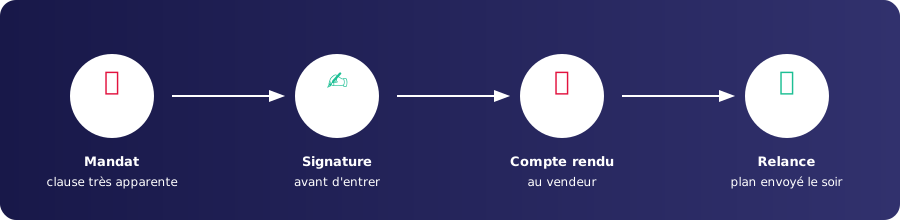
The clause that keeps a seller from cutting you out belongs in the listing agreement, with a defined number of days after expiration and a requirement that you deliver a list of the buyers you introduced. The touring agreement on the buyer side and the protection period on the seller side work together; neither does the other's job.
Buyer data: what to collect
A touring agreement collects personal information, so treat it like any other client record. The US has no single federal privacy law for brokerages, and state rules vary: California's consumer privacy law, for example, applies to businesses that meet its size or data thresholds. Three habits keep you on safe ground in any state.
Collect only what you need. Name, phone, email, tour date: enough to prove the tour and follow up. If your brokerage verifies identity before a first showing for safety reasons, follow its written policy on what is copied and how long it is kept.
Tell buyers how you'll use it. One line on the form is enough: who keeps the data, for what purpose, and how to ask for it to be corrected or deleted.
Set a retention period. Keep signed agreements for as long as your state requires brokerage records to be kept, and archive inactive leads instead of mailing them forever.
Paper or electronic?
Both are valid. The federal ESIGN Act gives electronic signatures and records the same legal effect as paper, and nearly every state has adopted the Uniform Electronic Transactions Act. A signature captured on a phone, time-stamped and emailed to the buyer, is a sound record.
Electronic forms have two practical advantages. The signing time is recorded, which makes the date hard to dispute. And the agreement lands straight in the buyer's file, with no retyping on Monday morning.
One thing doesn't change: get the signature before you walk in. An agreement signed after the tour misses the point of the rule and weakens your position in any dispute.
After the showing: from touring agreement to buyer follow-up
A touring agreement that ends up in a folder has done one thing: kept you compliant. Used well, it also helps you sell.
Showing feedback for the seller
Sellers want to know what happens at their home, and a listing agent who reports regularly keeps the listing. Showing records are the raw material: number of tours, buyer profiles, objections that keep coming up. A seller who reads "4 tours, 3 comments about the bathroom, 2 about the price" agrees to a price adjustment or a small fix far more easily than one who hears "it's slow."
It is also the moment to talk about the listing itself. If buyers find a brighter living room in person than in the photos, the photos need redoing. Our real estate photography guide covers how to get those shots right with natural light.
Following up with the buyer
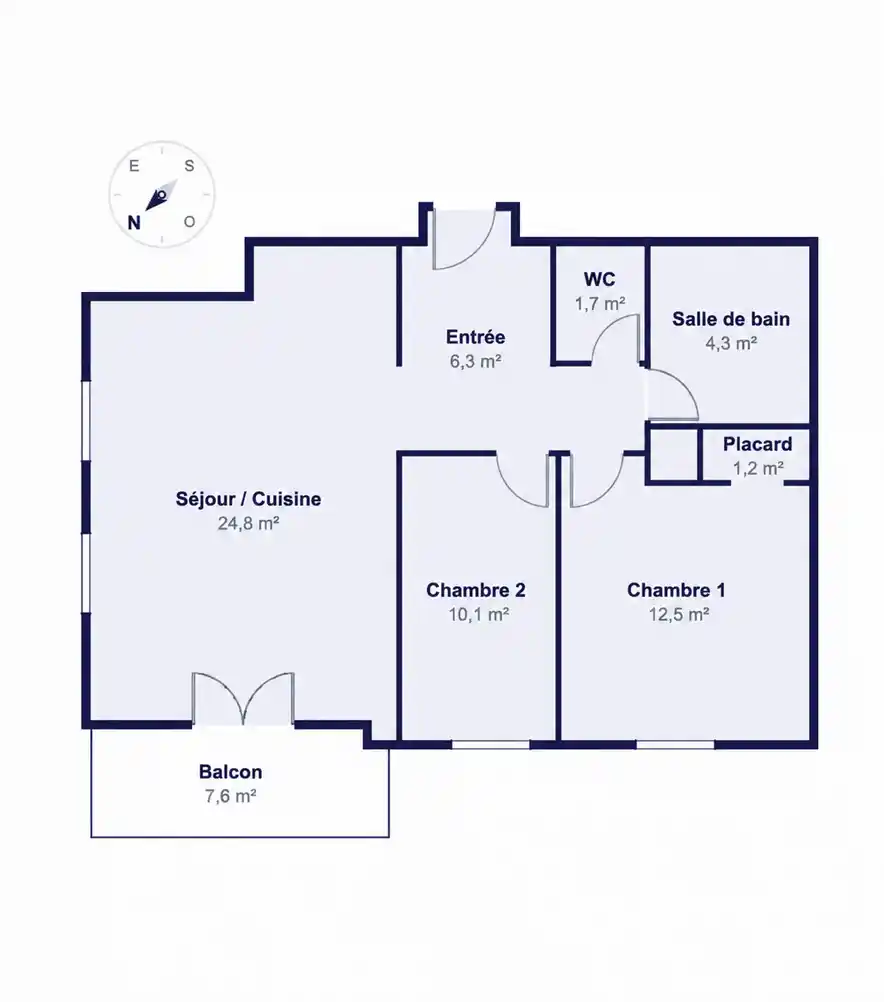
On the evening after a showing, the buyer is comparing homes. They remember a kitchen, a deck, rarely the layout. That is when to send the home back to them in a form they can explore on their own or show their partner: the 2D floor plan, its 3D view, and the listing photos.
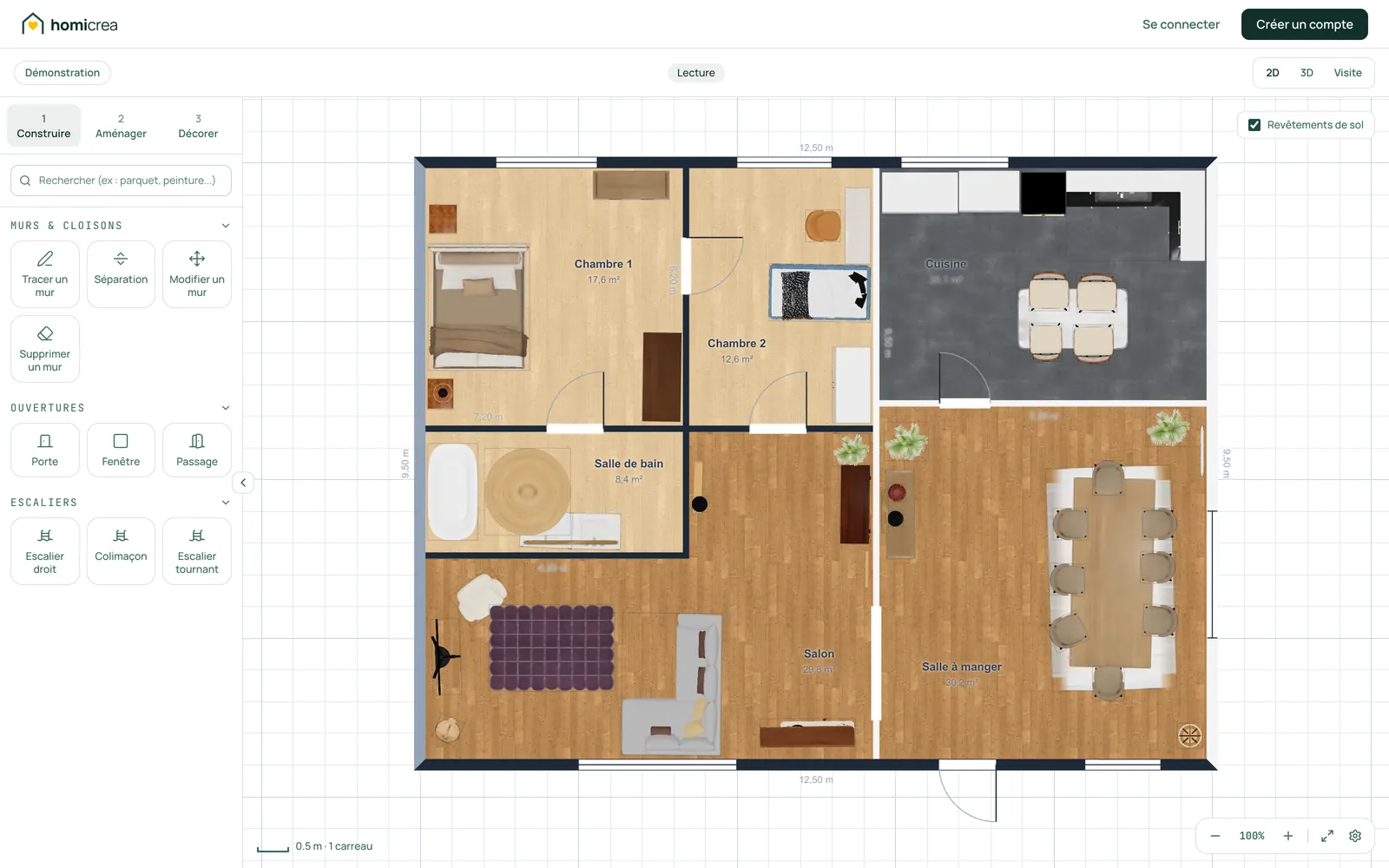 The floor plan sent to the buyer on the evening of the showing: they can retrace the layout they just walked through
IACrea's 3D floor plan answers exactly that question: how to follow up with a potential buyer without settling for "so, what did you think?" The interactive floor plan goes further by placing the listing photos on the plan, room by room, shared with a single link. And if you use the plan to double-check the advertised square footage, our article on living area and floor plan measurements explains what is at stake.
Your buyer database
Every signed touring agreement is a qualified lead: someone actively searching in your area, with a budget. The buyer who passed on this home may buy the next one, or need to sell their own. Tag agreements by search criteria and reach out with every new listing that fits. Our guide to AI lead generation for real estate shows how this database fits with inbound leads, and IACrea's real estate lead generation feeds it with local sellers and buyers.
Mistakes that weaken a touring agreement
The same problems keep showing up in the forms agents pass around:
| Mistake | Consequence | Fix |
|---|---|---|
| Vague scope ("homes in Austin") | Hard to tie the agreement to a specific purchase | Exact address or clearly defined area |
| Only one spouse signs | The other buys alone or through an entity | Every buyer signs |
| Open-ended compensation | Non-compliant with NAR's practice changes | A stated amount or rate, with the cap |
| Signed after the tour | Rule breached, date disputable | Signature before entry, time-stamped |
| Listing agreement without a protection period | No recourse when the seller cuts you out | Protection period with a list of introduced buyers |
| Agreement filed and forgotten | No follow-up, no seller feedback | Digital agreement in the buyer file the same day |
The same logic applies on the seller side: a seller convinced by a solid home valuation report signs a listing agreement with the right protections more readily.
FAQ
Do I need a touring agreement before showing a home? If you are an MLS participant working with a buyer, yes. Since August 17, 2024, NAR's practice changes require a written agreement with the buyer before touring a home, in person or through a live virtual tour. Some states require a written buyer agreement even earlier, and their rule controls.
What is the difference between a touring agreement and a buyer agreement? A touring agreement is a short, limited written buyer agreement: it can cover one home, one day, or one area, often without exclusivity. A full buyer representation agreement covers the whole search and the services you provide. Both must disclose your compensation in an objectively ascertainable amount.
Does an open house require a touring agreement? No. NAR's guidance states that an open house is not considered touring a home, so the agent hosting it does not need written agreements with visitors. A sign-in sheet is still worth keeping as a dated record of who came.
Can a buyer refuse to sign a touring agreement? Yes. The buyer can tour with the listing agent, attend open houses, or negotiate a different agreement. If you are an MLS participant working with that buyer, though, you cannot take them on a tour without a signed written agreement.
What happens if a buyer I showed a home to buys it through someone else? Your touring agreement or showing record proves you introduced the buyer, but it does not guarantee a commission. Between REALTORS, the dispute goes to procuring cause arbitration at the local association. Against the seller, you rely on the protection period in your listing agreement.
Conclusion
A touring agreement doesn't guarantee your commission: it keeps you compliant and proves an introduction, and that proof only goes as far as your listing agreement allows. Keep it short, get every buyer's signature before you walk in, and don't ask it to do the protection period's job. Then use it for what it does best: feeding seller feedback and buyer follow-up. To send that follow-up the same evening with the floor plan, take a look at IACrea's 3D floor plan.
About the author

Co-founder & CEO of IACrea
Pauline Clavelloux is co-founder and CEO of IACrea. In daily contact with real estate agencies and agents, she understands their challenges around visibility, marketing and lead generation. On the blog, she shares actionable strategies on real estate marketing, social media and prospecting in the age of AI.
Related articles

Ready to turn your photos into content that sells?
Join thousands of real estate agents using IACrea to create professional content in seconds.
Try for free →