
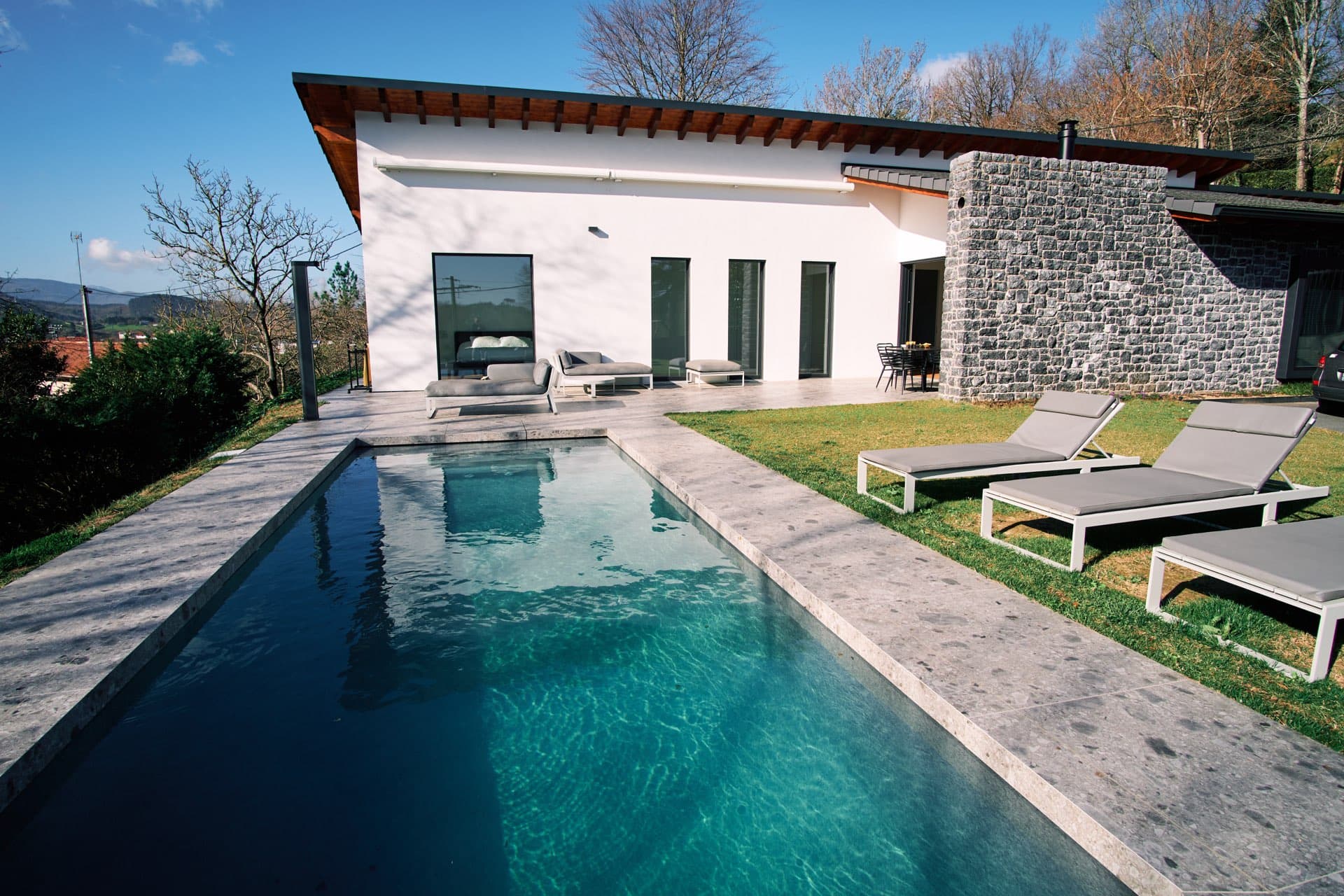
Buyers' agents rank both formats high. In the NAR 2025 Profile of Home Staging, 48% say having videos for a listing matters to their clients, and 43% say the same about virtual tours. Photos still lead at 73%. Two formats, two solid cases, and one question every agent faces in 2026: which one do you pick when you have neither the budget nor the time for both?
A real estate virtual tour and an AI-generated real estate video solve the same problem: letting buyers experience a home from a distance. But they work differently, cost differently and serve different purposes. This guide compares the two formats side by side, criterion by criterion, so you can choose the one (or the combination) that actually fits your listing.
What you'll learn in this guide:
- What really separates a 360° virtual tour from an AI real estate video
- A side-by-side comparison on 7 criteria: cost, turnaround, immersion, equipment, reach
- The strengths and real limits of each format
- Why combining the two is the winning strategy in 2026
- Our verdict by type of home and agent profile
360° virtual tour vs AI video: two formats, one goal
What is a 360° real estate virtual tour?
A 360° virtual tour is an interactive walkthrough. The viewer moves from room to room by clicking on hotspots and gets a full panoramic (360°) view at each stop. It is built from a series of photos or scans taken with a dedicated 360° camera, then stitched by specialized software into a clickable tour.
It is the closest thing to an in-person showing done remotely: the buyer decides where to look, goes back, zooms in on a detail, just as if they were standing in the home.
What is an AI-generated video (photo-to-video)?
An AI real estate video works on a completely different principle. It starts from a single still photo (the one you already took with your phone), and the AI turns it into a 5- to 15-second animated clip, with a smooth camera move that follows the room's perspective.
Unlike a virtual tour, there is no free navigation here. It is a linear sequence, built to grab attention in a few seconds on social media or in a standard listing video.
Side-by-side comparison: 7 criteria to decide
| Criterion | 360° virtual tour | AI video (IACrea) |
|---|---|---|
| Cost per home | About $100–$400 (photographer) | €2–€8 per video |
| Turnaround | 1–3 days | Under 2 minutes |
| Equipment needed | Dedicated 360° camera | Phone (a photo you already have) |
| Experience | Free, immersive navigation | Short, linear clip |
| Best for | Luxury homes, out-of-town buyers | Social media, volume, tight budgets |
| Format | Web link embedded in the listing | MP4 file (listing portals + social media) |
| Homes per day | 1 to 3 | 20 to 50 |
For most mid-market homes, AI video covers the need at a cost and speed nothing else matches. For luxury listings, or buyers purchasing from out of town, a 360° virtual tour is still a sound investment.
The 360° virtual tour: strengths and real limits
Where it shines: immersion and trust
A 360° virtual tour reassures buyers who can't get to the home quickly, a profile that keeps growing with job relocations and remote purchases. It lets them check the exact room layout, how the spaces flow into each other and which way the windows face. A linear video doesn't fully convey that.
It also works as a filter. A buyer who has already toured the home virtually before showing up in person is usually more committed, which cuts down on wasted showings for you.
What holds it back day to day
In 2026, a 360° virtual tour is still heavy to roll out across an active book of listings:
- Dedicated equipment: you need a 360° camera or a photographer who has one. You can't build a tour from a regular phone photo
- Time on site: 30 to 60 minutes per shoot, against a few seconds for a standard photo
- Total cost: at 40 listings a year, 360° virtual tours add up to roughly $4,000 to $16,000 annually, a budget few solo agents can justify across their whole book
The result: in practice, agents save the 360° virtual tour for high-value homes rather than using it on every listing.
AI video: strengths and real limits
Where it shines: speed and volume
Example: an exterior tracking shot generated by AI from a single photo, ready in under 2 minutes
AI video starts from a completely different premise: there is nothing to film on site. A photo you already took with your phone, the same one you put on the listing, is enough to create an animated clip. That is how you can handle 20 to 50 homes a day, against 1 to 3 with a 360° virtual tour.
Short clips (5 to 15 seconds) are also what social platforms push. Instagram and TikTok are built around short vertical video, and a 360° virtual tour simply doesn't fit there.
Its limit: no free navigation
The tradeoff for speed is that the viewer doesn't control the path. An AI video shows what you chose to show, in the order you chose. It can't replace the freedom of a 360° virtual tour for a buyer who wants to check one specific detail, like the ceiling height or which way a bedroom faces.
Example of a camera move through a living room: AI video captures the mood, not free exploration
Why not combine both? The winning duo in 2026
For homes that justify it, “360° virtual tour or AI video” is a false choice. The two formats play complementary roles in the path from first glance to showing:
- AI video drives the traffic. Posted on Instagram, Facebook and on the listing itself, it grabs attention in a few seconds and pushes the click to the full listing page.
- The 360° virtual tour turns that traffic into qualified showings. Once the viewer is interested, the immersive walkthrough convinces them to take the next step: booking a showing.
IACrea lets you work both angles. Beyond AI video created from your standard photos, its virtual staging for 360° photos automatically furnishes an equirectangular 360° photo with AI. You can also assemble the tour itself in IACrea from your 360° photos and share it with a link, a QR code or an embed on your site. The same home can get a virtually furnished 360° view and short prospecting videos, with no second shoot and no second budget.
On a luxury home, the AI video of the pool earns the click; the 360° virtual tour of the interior turns it into a booked showing
To go further on visual prep, adding virtual staging to vacant homes boosts both formats. A virtually furnished home works just as well in a video as in a 360° tour.
Which format to choose for your profile and your listing
Standard single-family home or condo
Recommendation: AI video first
The cost, speed and volume of AI video are unbeatable in this segment, which is the vast majority of the market. An agent with 40 listings a year can cover the whole book with video for less than €800 a year, against $4,000 or more for the same volume of 360° virtual tours.
Luxury home or out-of-town buyer
Recommendation: a 360° virtual tour on top of video
Here, the 360° virtual tour pays for itself: the typical buyer can only make so many trips and wants to check the full layout before any in-person visit. Pair it with short AI videos for social media.
Vacant home or quick sale
Recommendation: AI video + virtual staging
With an empty home, the priority is helping buyers picture it furnished. Virtual staging combined with AI video does that in a few minutes, without waiting for a 360° photographer to have an opening.
Where to share your virtual tours and AI videos
On the MLS: most MLSs give you a virtual tour URL field, often split into branded and unbranded versions. A listing video usually goes in through the same field as an unbranded link. What an unbranded tour or video may show (agent name, logo, contact info) varies by MLS, so check your MLS's rules before you upload.
On social media: only AI video really works here. Instagram Reels, Facebook and YouTube Shorts can't host a room-to-room 360° walkthrough; at best, you post a link to it. Read our guide on using your real estate photos on social media to build a complete distribution plan.
On your website or a dedicated listing page: this is where the 360° virtual tour fits best, paired with a teaser video that sends people to that page. Browse before-and-after examples of homes processed with IACrea to see what the two formats can do together.
FAQ
Is a 360° virtual tour better than an AI video for selling a home? Neither wins across the board. They do different jobs. A 360° virtual tour shines on luxury homes, where buyers want to explore every corner on their own before they make the trip. An AI video shines on social media, at volume (20 to 50 homes a day) and on a tight budget. For most standard residential sales, AI video gives you the best mix of impact, cost and speed.
How much does a real estate 360° virtual tour cost in 2026? A professional 360° virtual tour from a photographer usually runs about $100 to $400 per home, depending on square footage and your market, with delivery in one to three days. An AI video from IACrea costs €2 to €8 per video and is ready in under 2 minutes. That gap is why AI video has taken over for everyday residential listings.
Can you use a 360° virtual tour and AI videos on the same listing? Yes, and in 2026 it is the strongest play. The 360° virtual tour anchors the listing page with an immersive view, while short AI videos drive traffic to that page from social media and listing portals. IACrea can also virtually stage an equirectangular 360° photo with AI, alongside the videos it creates from your standard photos.
Do you need special equipment to create a 360° virtual tour? Yes. An AI video starts from a regular phone photo, but a 360° virtual tour needs a dedicated 360° camera (or a photographer who owns one) and software that stitches the capture points into a walkthrough you can navigate. That means buying gear and spending time on site, which an AI video made from a photo you already have does not require.
Can AI video replace the 360° virtual tour entirely? Not for luxury homes or out-of-town buyers. There, the 360° virtual tour keeps a real edge: free 360° navigation shows the exact layout in a way a linear video cannot. For the rest of the market, which is the vast majority of sales, AI video covers the need at a fraction of the cost and time.
Conclusion: two complementary formats, not rivals
A 360° virtual tour and an AI video don't compete for the same spot in your marketing. The tour reassures and converts on the listing page; the video drives the traffic that gets people there. For most of your listings, AI video remains the most cost-effective choice. Save the 360° virtual tour for homes that justify the investment.
Try AI real estate video with IACrea and see our virtual staging for 360° photos. Your first generations are free, no contract. Check our pricing plans to find the plan that fits your listing volume.
About the author

Co-founder & CTO of IACrea
Constance Laborie is co-founder and CTO of IACrea, the AI platform that helps real estate professionals create their visuals — photos, virtual home staging and videos — in seconds. She leads the product and technical development of the platform and writes practical guides on real estate photography, virtual home staging and the use of AI in real estate.
Related articles
Ready to turn your photos into content that sells?
Join thousands of real estate agents using IACrea to create professional content in seconds.
Try for free →