

In 2026, AI in real estate stopped being a side experiment. US existing-home sales were stuck at 4.06 million in 2025, the same as in 2024 (NAR), and in a flat market, how a listing looks carries more weight. 83% of buyers' agents say staging makes it easier for buyers to picture a home as their own, and 48% say video in a listing is highly important to their clients (NAR). Yet for most solo agents, a staged, video-ready listing used to be out of reach. This look at real estate AI in 2026 shows a two-speed industry: agents who built AI into how they produce content, and agents still working like it's 2020.
This guide covers the numbers that matter, the uses that actually grew this year, and what artificial intelligence still hasn't changed about being a real estate agent.
What you'll learn in this report:
- The key numbers behind how AI reshaped real estate marketing in 2026
- Which tools (virtual staging, video, photos, prospecting) grew the most
- What didn't change, despite all the new technology
- How to prioritize these tools if you or your brokerage haven't started yet
2026, the year AI became standard in real estate marketing
The market itself is far from booming. NAR started the year forecasting a 14% jump in existing-home sales, then trimmed that to 4%, with mortgage rates projected to average 6.5% in 2026 (NAR, June 16, 2026). The median home price is expected to climb 4% as well, so affordability stays tight for buyers and every listing has to work harder to stand out.
When demand is soft, presentation weighs more on results than it does in a hot market. That's exactly what turned AI, within a year, from an experiment into a standard part of how a growing share of agents produce their marketing. Our analysis of AI real estate marketing strategies for 2027 looks at how these uses keep taking shape beyond this report.
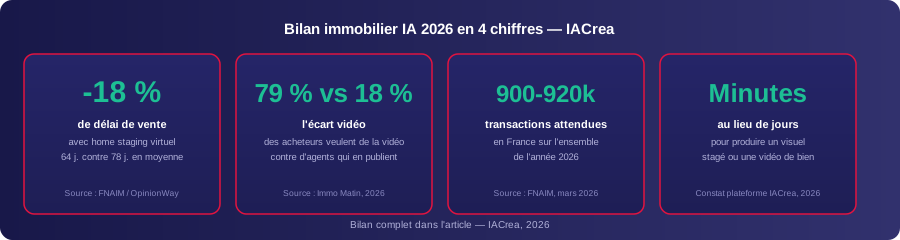 The 2026 picture in France in four numbers (infographic in French): virtual staging, the video gap, sales volume, and production time
| Metric | Before AI (the traditional way) | In 2026 (with AI) |
|---|---|---|
| Staging | Median $1,500 for a staging service (NAR), furniture moved in | A few euros per photo, results in minutes |
| Listing video | Professional shoot, dedicated budget | Generated from one photo, no camera or editor |
| Photos | Pro camera + manual editing | Phone photo + AI HDR effect |
| Seller pitch | Printed portfolio or static PDF | Digital before/after portfolio, always up to date |
Virtual staging: the tool that grew the most
Virtual staging is still, in 2026, the AI use with the most measurable impact on results. NAR's 2025 Profile of Home Staging gives the clearest US numbers on staging: 49% of sellers' agents say it reduced time on market (30% saw a slight decrease, 19% a significant one), and 29% saw a 1% to 10% increase in the dollar value offered (NAR). The survey covers staging in general, not virtual staging specifically, but the reason it works is the same: buyers need to picture themselves in the room. The living room matters most (37%), followed by the primary bedroom (34%) and the kitchen (23%).
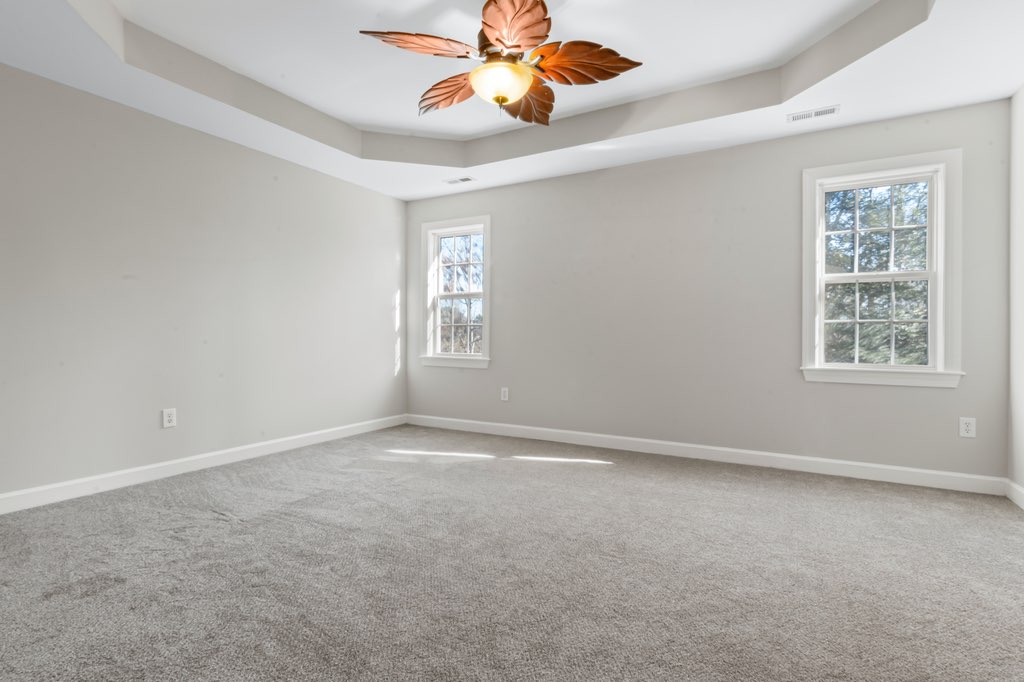 Before: an empty room that's hard for a buyer to picture
 After: the same room furnished with virtual staging, AI-generated image
What changed in 2026 isn't the technique itself (virtual staging has been around for years) but who can use it. A solo agent with no photographer budget now produces, alone, staged photos they used to outsource to a specialist and wait several days for. The before/after examples published this year show how big that shift is on empty homes, homes with dated furniture, and homes that simply look tired.
One rule tightened this year too. California's AB 723, in effect since January 1, 2026, requires a disclosure and access to the original image for digitally altered listing photos, on top of the “true picture” standard in Article 12 of the NAR Code of Ethics. Label your staged photos “Virtually staged” and keep the original on hand.
AI video: the gap between what buyers expect and what agents produce
The second big story of 2026 is video. In the same NAR survey, 48% of buyers' agents say video in a listing is highly important to their clients, right behind photos (73%) and physical staging (57%). Among sellers' agents, 47% rate video as important to their sellers. Demand is there.
The holdup was never a lack of interest from agents. It was the cost and hassle of traditional video: gear, a shoot, editing. IACrea's AI video removes that barrier: one photo is enough to generate a clip with camera movement, ready to export as an Instagram Reel or a Facebook Story, in minutes instead of days.
On the IACrea platform, the 2026 trend is clear: agents who combine virtual staging and video on the same listing post on social media more consistently than those who use only one of the two. Video becomes the format that keeps a listing alive after the first spike in views has passed.
Photos and the HDR effect: pro-quality real estate photography for everyone
The third shift in 2026 happened at the shoot itself. HDR photography, where several exposures are merged to balance a bright interior with the view through the window, used to be reserved for photographers with a pro camera and a tripod.
In 2026, that look went mainstream through the HDR effect applied by AI on a phone: one photo, no extra gear, no bracketing, no technical skills. The IACrea photo app balances the exposure, swaps a gray sky for a blue one, and gets the photo ready for virtual staging, all from a single shot on site. That's a full workflow change compared to a traditional photo shoot, which takes longer to book and to deliver.
Bringing the shoot and AI real estate photo editing together shortens the time between signing the listing agreement and the listing going live. That matters more and more: sellers notice how fast you move from the very first days.
Prospecting and social media: the seller's new path to an agent
AI in real estate in 2026 isn't only about presenting the homes you already have listed. It also changes how you win new listings. A potential seller now forms an opinion about you before the first call: through your active listings, your Instagram account, and the track record of sold homes they can find online.
Our guide to automated prospecting with IACrea shows how independent agents set up this channel in 2026, from targeted Facebook campaigns to lead tracking. IACrea's multi-platform scheduling lets you schedule posts for a listing across several networks in advance, without logging into each one, a real time saver if you handle your own marketing.
What 2026 confirms: the visual quality of your portfolio has become a prospecting asset in its own right, on par with referrals and local market knowledge. Our article on real estate prospecting with AI covers four practical strategies to turn that visibility into new listings.
AI in real estate in 2026: what didn't change
It would be wrong to call 2026 the year AI replaced the work of a real estate agent. The numbers show the opposite: AI sped up content production and lightened the admin load, but negotiation, pricing an unusual home, and building trust with a seller are still human skills. None of them were automated this year, and nothing suggests they will be in 2027.
The agents and brokerages that grew the most in 2026 aren't the ones that adopted the most tools. They're the ones that took the time saved on content and put it back into client relationships and the deals already in their pipeline.
FAQ
Which AI tools changed real estate marketing the most in 2026? Three uses took off: virtual staging to make empty homes easier to picture, video generated from photos for social media, and the AI HDR effect applied to phone photos. On the IACrea platform, these are the three uses that grew the most among agents in 2026.
Did AI really help homes sell faster in 2026? AI doesn't change market conditions: NAR expects existing-home sales to rise only 4% in 2026. What it changes is how a single listing performs. In NAR's 2025 Profile of Home Staging, 49% of sellers' agents say staging reduced time on market, and virtual staging is the low-cost way to give buyers that same help picturing an empty room.
Do you need a big budget to use AI in real estate? No. AI photo and video tools are pay-as-you-go, a few euros per photo or per video, with no equipment to buy and no editing software. That's one of the big shifts of 2026: what used to take a professional photographer's budget is now within reach of a solo agent.
Will AI replace real estate agents? No. AI changes how you produce listing content and manage follow-up, not the client relationship, the negotiation, or your knowledge of the local market. In 2026, the agents who grew the most used AI to free up time for exactly that high-value work.
What's the first step for an agent or brokerage that hasn't adopted AI yet? Start with one tool instead of changing everything at once: usually virtual staging on the empty homes you already have listed, because it has the most visible effect on showing requests. Video, post scheduling, and prospecting come next, once that first habit sticks.
Conclusion
AI in real estate moved faster than expected on content production in 2026, but not on the heart of the job: trust and negotiation are still human. The agents who get the most out of it treat AI as a way to win back time, not as a replacement for their expertise.
Try IACrea for free and turn your first photos into staged images in under five minutes. See our plans.
About the author

Co-founder & CTO of IACrea
Constance Laborie is co-founder and CTO of IACrea, the AI platform that helps real estate professionals create their visuals — photos, virtual home staging and videos — in seconds. She leads the product and technical development of the platform and writes practical guides on real estate photography, virtual home staging and the use of AI in real estate.
Related articles

Ready to turn your photos into content that sells?
Join thousands of real estate agents using IACrea to create professional content in seconds.
Try for free →