
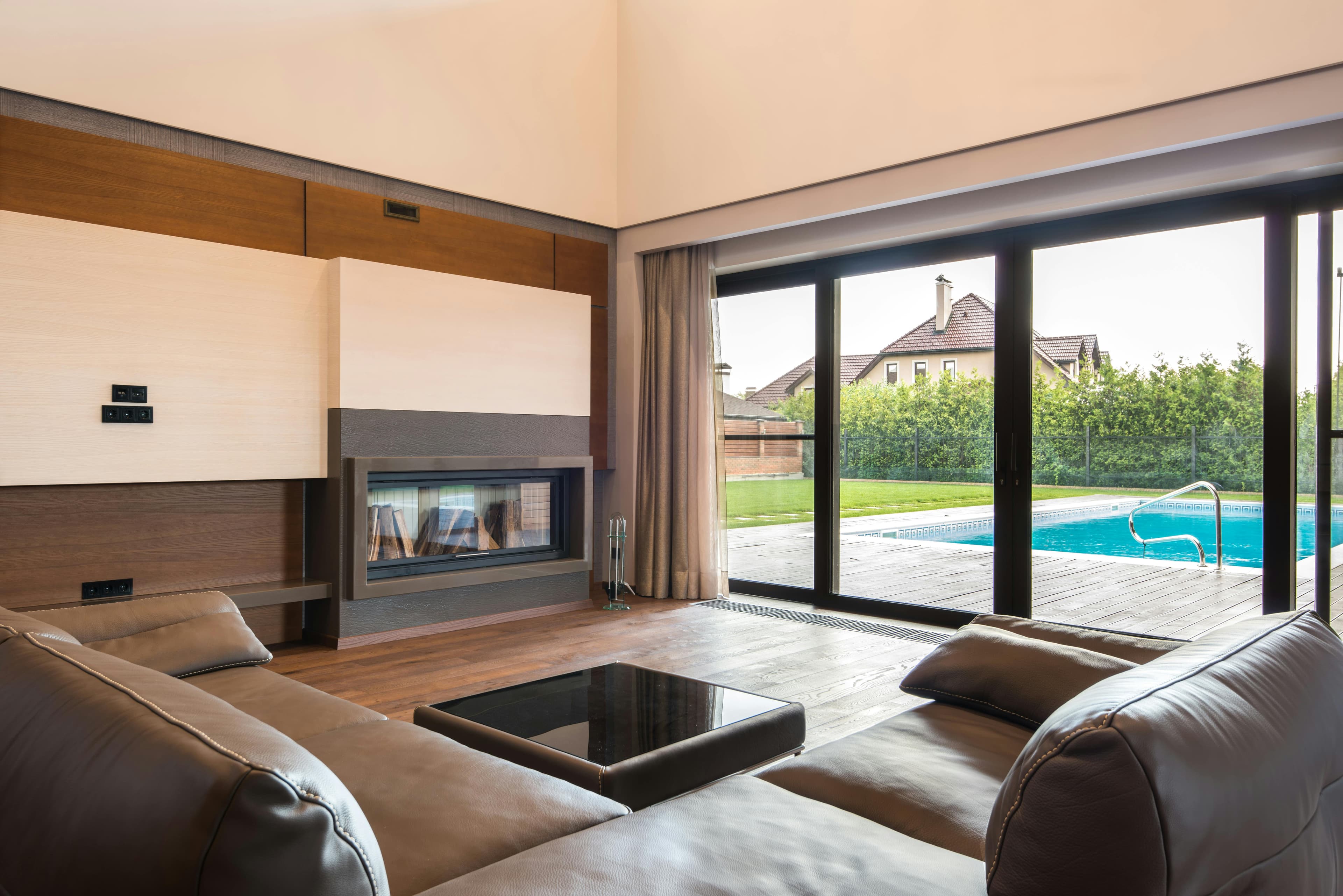
A multimillion-dollar home isn't staged like a starter condo. Yet high-end buyers judge it the way everyone else does: in a few seconds, from the first photos. In NAR's 2025 Profile of Home Buyers and Sellers, 81% of buyers said listing photos were very useful in their home search (NAR).
Luxury home staging works by different rules than standard staging: fine materials to reveal, volumes you never crowd, outdoor spaces to bring to life. This guide covers those rules and shows how to apply them with virtual staging.
What you'll learn in this guide:
- What sets luxury home staging apart from standard staging
- Why virtual staging now makes sense for luxury homes too
- The style rules to follow (materials, light, outdoor spaces)
- How to do it step by step with IACrea
- The mistakes that give away bad staging on a high-end home
Luxury home staging: a discipline of its own
Luxury home staging isn't about “furnishing an empty room nicely.” On a typical listing, the goal is to neutralize the interior so as many buyers as possible can picture themselves living there. On a high-end home, it's the reverse: reveal the architecture, the materials and the lifestyle that already justify the asking price, without ever piling on decor.
How luxury staging differs from standard home staging
Three differences shape the approach:
| Criterion | Standard home staging | Luxury home staging |
|---|---|---|
| Goal | Neutralize, appeal to the widest pool of buyers | Reveal the architecture and the home's standing |
| Furniture | Simple, functional, interchangeable | Hand-picked pieces, fine materials, the right scale |
| Outdoor spaces | Often secondary | Center stage (pool, terrace, garden) |
| Margin for error | Forgiving | Thin: one wrong detail rules the home out |
A buyer shopping for an exceptional home isn't just looking for square footage. They want to feel something and picture a way of life. That emotional side is what makes luxury staging more demanding, and what gives it more weight in the buying decision.
Why virtual staging for luxury homes is catching on
Physical staging has long been the default in luxury real estate, partly because only high-value homes could justify the bill. NAR puts the median spent on a professional staging service at $1,500 (2025 Profile of Home Staging), and a large luxury home with many rooms to furnish can cost considerably more. Virtual staging changes the math: photorealistic results for a fraction of that budget, with no downtime for the home and no need to move the furniture of sellers who still live there.
Staging's effect on price is documented too. In the same NAR report, 17% of buyers' agents said staging raised the dollar value buyers offered by 1% to 5% compared with similar unstaged homes (NAR). On a $3 million home, 1% is $30,000, far more than the cost of staging, virtual or physical.
Photos carry the most weight. In the same survey, 73% of buyers' agents rated photos as important to their buyers, ahead of physical staging (57%), video (48%) and virtual tours (43%). High-end buyers compare listings online before they book a showing, and any flaw the photos expose becomes leverage at the negotiating table. Bottom line: a luxury home should never hit the market with photos that don't show it at its best.
For the basics of the method, our complete virtual staging guide walks through the core process. This guide adds what changes on high-end listings.
The style rules for a high-end home
Fine materials and natural light
Luxury staging puts forward what the home already has: marble, solid hardwood floors, steel-framed glass walls, exposed stone. Build the decor so those materials can breathe instead of covering them up. Natural light comes first. Don't try to rescue a dark room with artificial lighting: shoot at the right time of day, get the exposure right and, if needed, apply an AI HDR effect that renders the volumes faithfully.
Open volumes, never oversized furniture
In a 2,150 sq ft (200 m²) open-concept space, a common mistake is adding piece after piece to “fill” it. It backfires: the room looks smaller and less upscale. Luxury staging favors a few strong pieces, well placed, that shape the flow through the room without blocking it.
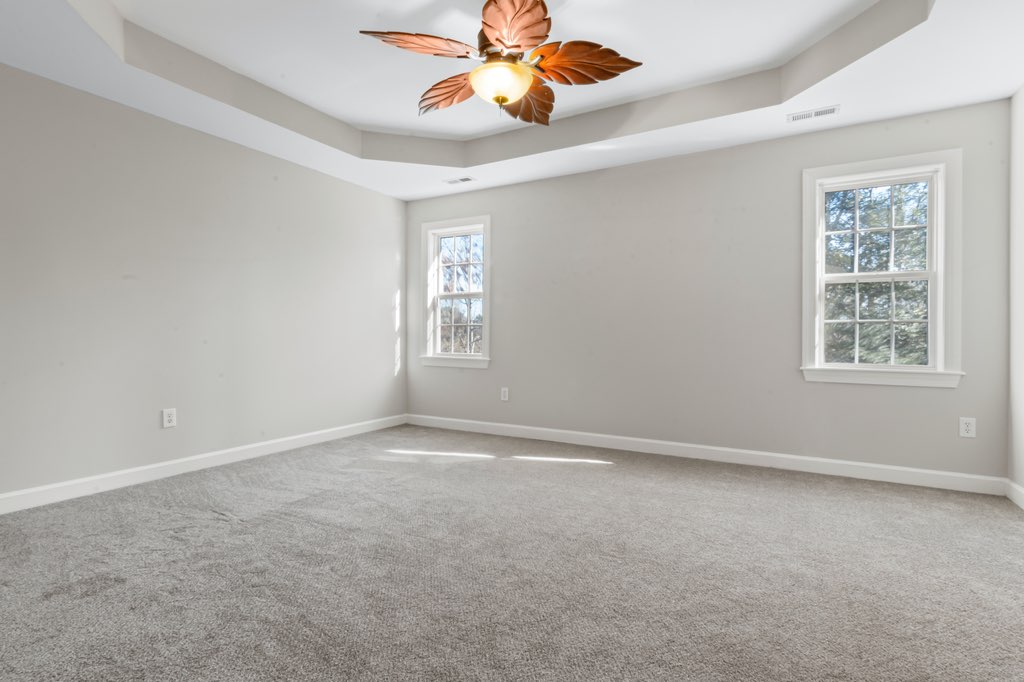 Before: an empty primary suite whose volumes are hard to read in a photo
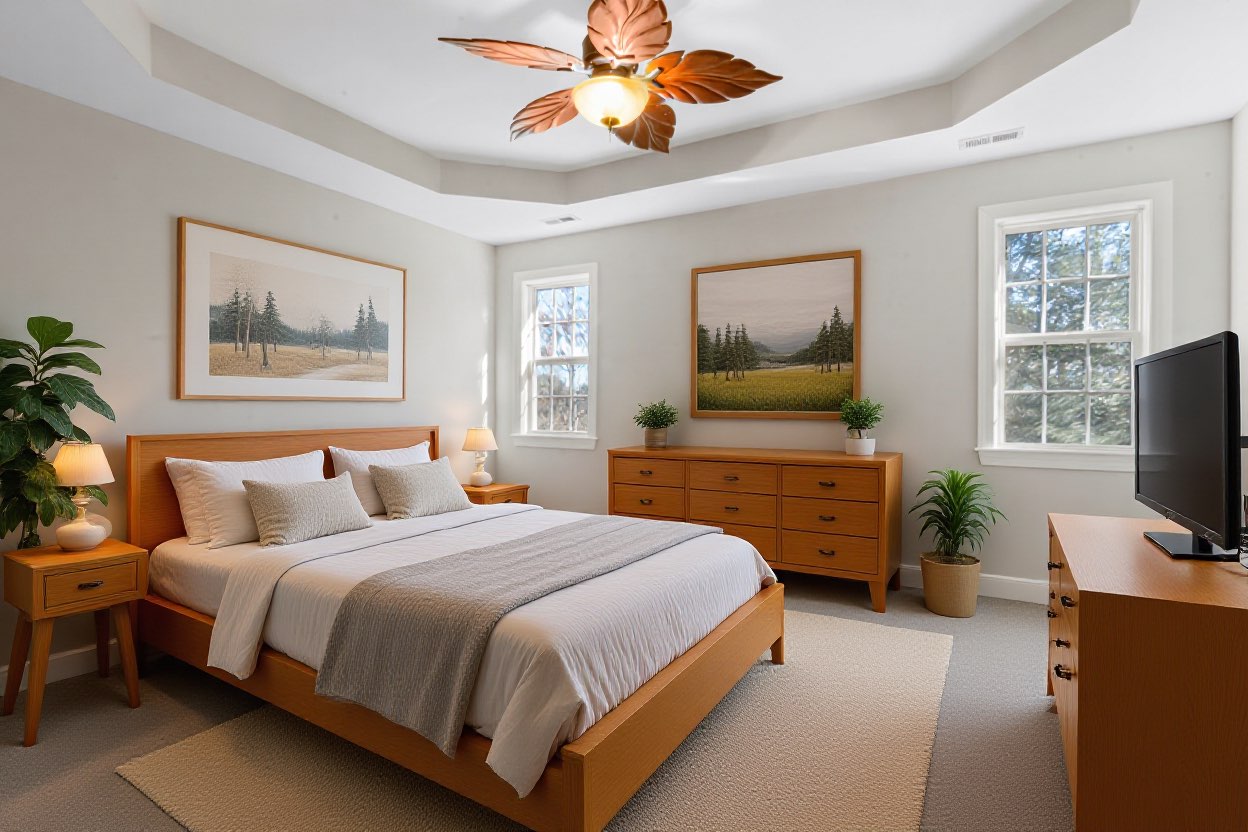 After: virtual staging shows what the room can be, with furniture scaled to the space. AI-generated by IACrea: label it “Virtually staged” in the listing.
To show these volumes in full in large rooms, lens choice matters as much as the staging itself. Our article on wide-angle real estate photography covers the settings that keep large rooms from looking distorted.
Showcasing standout outdoor spaces: pool, terrace, garden
In luxury real estate, outdoor space is never an afterthought. Buyers weigh it as heavily as the square footage. A pool, a terrace with a view, a landscaped yard: present them with as much care as the interior, with designer outdoor furniture and staging that suggests the life they offer.
 Before: an outdoor space with real potential that's hard to picture as is
 After: outdoor furniture and landscaping added virtually to show how the space can be lived in
IACrea's AI exterior design feature does exactly that: it adds patio furniture, plants or landscaping to an existing photo of a pool, terrace or yard, without touching the property.
Which virtual staging style to choose for discerning buyers
The style should extend the existing architecture, never fight it. Three directions come up most often on high-end listings:
- Clean contemporary: crisp lines, designer furniture, neutral palette. Best for architect-designed homes and new construction
- Timeless classic: traditional materials, furniture with character, warm tones. Best for historic estates and older homes
- Natural and organic: raw wood, stone, greenery. Especially relevant for properties with a pool and large outdoor spaces
What style works for discerning buyers when the home is unusual?
On a home with a strong identity (industrial loft, converted barn, vineyard estate), lean into the home's dominant style rather than forcing a generic trend. Scandinavian furniture in a 1920s Spanish Colonial Revival estate creates a mismatch that undercuts the sense of luxury, even if every piece is high quality on its own.
How to virtually stage a luxury home with IACrea
Step 1: shoot in the best possible conditions
For a luxury home, the starting photo drives the final result. The IACrea real estate photo app shoots at the resolution needed for the best AI processing, then applies an AI HDR effect. That's a must on homes where buyers scrutinize every detail.
Step 2: declutter if the home is occupied
If the sellers still live there, start with virtual decluttering to remove personal items and mismatched furniture before you build the new staging.
Step 3: pick the style and the rendering quality
In the virtual staging editor, choose the style that extends the home's architecture and select the highest quality tier available. High-fidelity rendering is essential on photos that discerning buyers will zoom into and study closely.
Step 4: approve, export and disclose the staging
Once you approve the result, export it in high resolution for the listing. As with any listing, disclose the staging. NAR's Code of Ethics (Article 12) requires REALTORS® to “present a true picture” in their advertising. In California, AB 723 has required a disclosure and access to the original image for digitally altered listing photos since January 1, 2026. MLS rules vary from one MLS to the next. Our article on virtual staging disclosure rules covers the wording to use in the listing.
Mistakes to avoid on a luxury home
Mistake #1: overstaging
Piling on decor to “look expensive” backfires: a crowded room looks less upscale, whatever the furniture costs. Fewer pieces, better chosen, at the right scale.
Mistake #2: generic furniture that doesn't match the home
Decor that's too neutral or too “catalog” won't convince buyers who have an eye for quality. The generated furniture has to match the home's perceived level, not a one-size-fits-all average.
Mistake #3: neglecting outdoor spaces
On a luxury home, a badly framed pool or a yard left raw in the photos can kill interest as surely as a poorly staged interior. Outdoor spaces deserve the same attention as the main rooms.
Mistake #4: skipping the disclosure
On high-value homes, transparency protects the agent as much as the buyer. A “Virtually staged” label on each staged photo avoids disappointment at the showing and keeps you in line with NAR's Code of Ethics and, in California, AB 723.
What virtual staging costs for a luxury home
NAR's median for a professional staging service is $1,500. A large luxury home with many rooms and high-end rental furniture can cost considerably more, and the setup pushes back the listing date. Virtual staging with IACrea is included in the subscription plans, at a price based on how many photos you process, not on what the home is worth. See our pricing page to compare plans for your business.
The ROI shows up in two places. First, time on market: in NAR's 2025 Profile of Home Staging, 30% of sellers' agents saw a slight decrease in time on market for staged homes, and 19% a significant one. Second, the stronger offers covered above. On a high-value home, both are worth far more than the cost of staging. Browse our before-and-after examples to see real results produced with IACrea.
FAQ
What is luxury home staging? Luxury home staging presents a high-end home on its own terms: fine materials left visible, open volumes, finished outdoor spaces (pool, terrace, garden) and restrained decor that never oversells the home. Standard staging neutralizes a space so it appeals to as many buyers as possible. Luxury staging reveals architecture and a lifestyle that are already high-end.
Does virtual staging work as well as physical staging on a luxury home? Yes, and it costs far less. NAR puts the median spent on a professional staging service at $1,500, and a large luxury home with many rooms to furnish can cost considerably more, with movers in the house for days. Virtual staging produces photorealistic results in minutes, for a fraction of the price, without touching the home itself. That matters when the sellers still live there or the house is full of their own furniture.
How much does virtual staging cost for a luxury home? With IACrea, virtual staging is included in the subscription plans, with no surcharge for high-end homes: the price depends on how many photos you process, not on what the home is worth. Compared with physical staging, the gap per listing is wide enough to stage several luxury listings for the price of one physical staging job.
Should you declutter a luxury home before staging it? Almost always. Occupied luxury homes tend to collect personal items, strongly personal decor or mismatched furniture that make the space hard to read. Virtual decluttering clears the room before it is refurnished, which helps most in large rooms where every object in the frame counts double.
How do you choose the right decor style for a high-end home? Match the existing architecture, not a generic trend: clean contemporary for a modern home with crisp lines, timeless classic for a historic estate, natural wood and stone for a property with a pool and big outdoor spaces. Skip oversized or busy furniture, which crushes the volumes instead of showing them off.
Conclusion
Luxury home staging isn't a pricier version of standard staging. It's a discipline of its own, where every detail (materials, furniture scale, outdoor spaces, light) shapes how buyers perceive the home's true standing. Virtual staging lets you apply those rules with the precision discerning buyers expect, without the cost or the lead time of physical staging.
In a luxury market where buyers compare every listing online before they set foot inside, photo staging is no longer a detail: it's a pricing factor. Try IACrea virtual staging on your next luxury listing and see the difference from the very first photos you publish.
About the author

Co-founder & CEO of IACrea
Pauline Clavelloux is co-founder and CEO of IACrea. In daily contact with real estate agencies and agents, she understands their challenges around visibility, marketing and lead generation. On the blog, she shares actionable strategies on real estate marketing, social media and prospecting in the age of AI.
Related articles
Ready to turn your photos into content that sells?
Join thousands of real estate agents using IACrea to create professional content in seconds.
Try for free →