
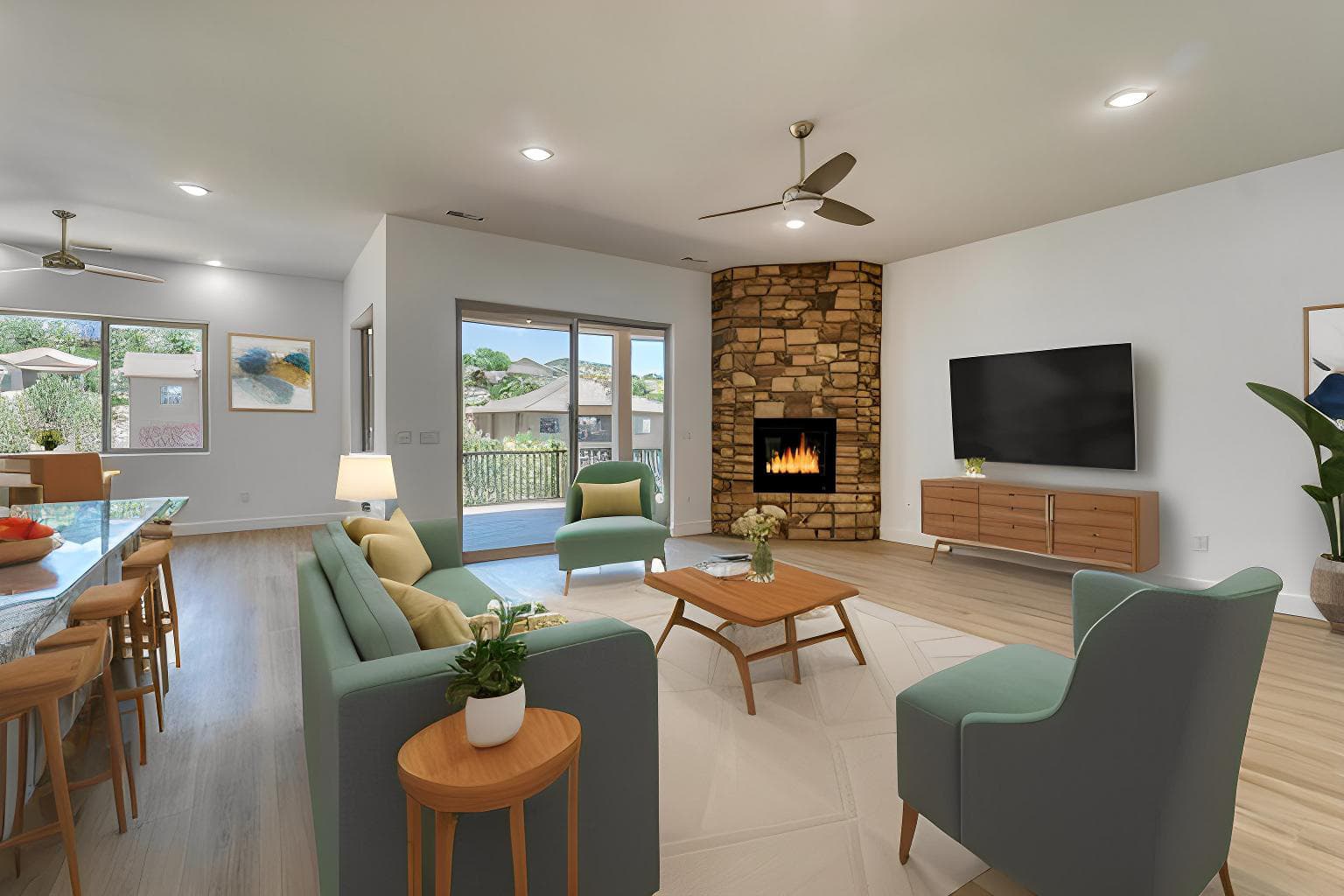
A single photo can showcase an entire 25 m² living room — or it can be squashed into a jumble of twisted lines that scare off buyers before they even visit. Between these two extremes, there are often only a few millimeters of focal length difference.
The real estate wide-angle has become the default tool for agents and professional photographers: it captures whole rooms with fewer shots. But poorly controlled, it can produce the opposite of the intended effect — distortion, exaggerated volumes, and a misleading impression during visits. This guide explains what the wide-angle truly offers, its technical limitations, and how to use it effectively without distorting the property's reality.
What you'll learn in this guide:
- What a wide-angle lens really is and why it dominates real estate photography
- The concrete benefits for your listings (time savings, visual appeal, click-through rate)
- The technical limitations: distortion, vignetting, volume exaggeration
- Which focal length to choose room by room
- The most common mistakes — and how to avoid them
- How to correct distortion in post-production, manually or with AI
What is a wide-angle lens in real estate photography?
In photography, a "wide-angle" lens is one with a focal length shorter than 35 mm (full-frame equivalent): it captures a wider field of view than the human eye. In real estate, the effective range typically falls between 16 mm and 24 mm — wide enough to show an entire room from a corner, without extreme fisheye distortions (below 12-14 mm).
Basically, a wide-angle lens allows you to photograph a 12 m² bedroom from the doorway opening and include the entire space — bed, window, wardrobe — in a single shot. This capability has made it the standard for listing portals, where each room must fit into a single, clear image that can be quickly viewed during scrolling.
Focal length, sensor size, and field of view: the basics to know
The field of view depends both on the lens focal length and the sensor size. A "24 mm" lens will produce different framing on a smartphone, an APS-C sensor, or a full-frame sensor — hence the systematic use of the full-frame equivalent to compare focal lengths across devices. On smartphones, this conversion is handled automatically by the device’s native "wide-angle" mode.
Advantages of Wide-Angle Lenses for Selling a Property
Instant time savings on each photo shoot
With a standard lens (35-50 mm), photographing an entire living room often requires multiple shots recomposed or a panorama assembled in post-production. Wide-angle lenses solve this issue with a single shot: fewer photos to take, less sorting, and less time spent per property.
Better first impressions on listing portals
The browsing online user decides within seconds whether to click on a listing. A thumbnail showing an entire room — rather than a dead angle or a wall — attracts more attention. SeLoger has measured that a listing illustrated with beautiful photos generates up to 7 times more visits than a listing without professional visuals.
Enhancement of space and brightness
Well mastered, wide-angle lenses give an impression of more space than a tightly cropped shot: they capture the depth of the room, the lines leading toward the windows, and all sources of natural light. This is a particular advantage for properties with modest volumes, where every visible square meter influences the buyer's perception.
The Limits and Pitfalls of Wide-Angle Lenses
Wide-angle lenses are not without drawbacks. The three most common optical issues are:
- Barrel Distortion: straight lines near the edges of the image (doors, window frames, wall corners) bend slightly. The shorter the focal length, the more pronounced the effect.
- Vignetting: visible darkening in the corners of the image, more common with entry-level lenses or those below 16 mm.
- Exaggerated Volumes: rooms photographed with a wide-angle always appear larger on screen than they actually are. The gap between the photo and the physical visit is one of the main causes of disappointment — and mistrust — for buyers.
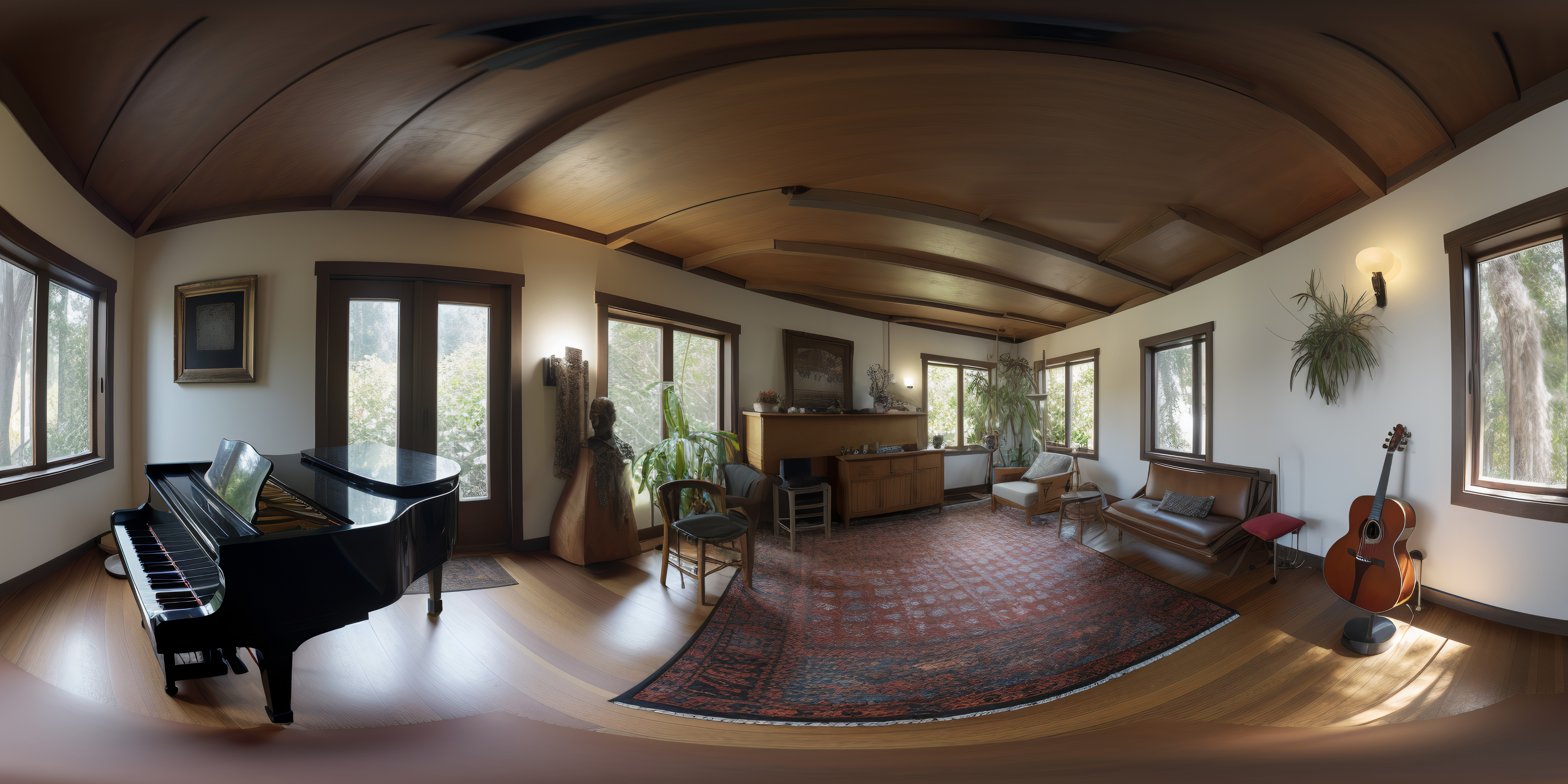 A too-wide framing without correction: the floor and ceiling lines bend, and a standard room looks artificially expanded
When the perceived discrepancy between the photo and reality exceeds 20%, many industry professionals notice an increase in negative comments during visits (“this isn’t what the photos showed”). The wide-angle should enhance a property, not oversell it.
Which focal length to choose based on the room?
There isn't a single focal length suitable for an entire property: each room has its own size and shape constraints.
| Room or situation | Recommended focal length | Point of attention |
|---|---|---|
| Living room, open kitchen | 16 – 20 mm | Larger rooms that tolerate more width |
| Standard bedroom | 20 – 24 mm | Avoid exaggerating a small space |
| Bathroom, toilet | 18 – 22 mm | Narrow room, but little depth to reveal |
| Facade, exterior, garden | 24 – 35 mm | Wide-angle lens distorts less but flattens distant perspectives |
| To avoid | Less than 14 mm (fisheye) | Excessive distortion, "magnifying glass" effect on objects near the edges |
This range of 16-24 mm is recognized by most professional real estate photographers as the optimal compromise between coverage of the room and proportion accuracy. To compare recommended cameras and lenses based on usage, the independent directory Les Outils Immo lists equipment and solutions dedicated to real estate photography.
The most common mistakes with a wide-angle lens
- Getting too close to a piece of furniture or a wall: With a short focal length, anything near the lens looks disproportionate compared to the rest of the room.
- Ignoring vertical lines: A slight tilt upward or downward is enough to make the walls "fall," a flaw immediately noticeable to the naked eye, even for non-photographers.
- Not checking the edges of the frame: This is where distortion and vignetting are most pronounced — a corner of furniture or a door at the edge of the image quickly reveals the flaw.
- Confusing wide-angle and fisheye: Beyond a certain point, the lens no longer enhances the room; it distorts it to the extent of misleading buyers about its true proportions.
- Never correcting distortion in post-production: Even a good lens produces slight curvature at the edges — correcting this takes a few seconds and significantly improves the overall perception of sharpness in the photo.
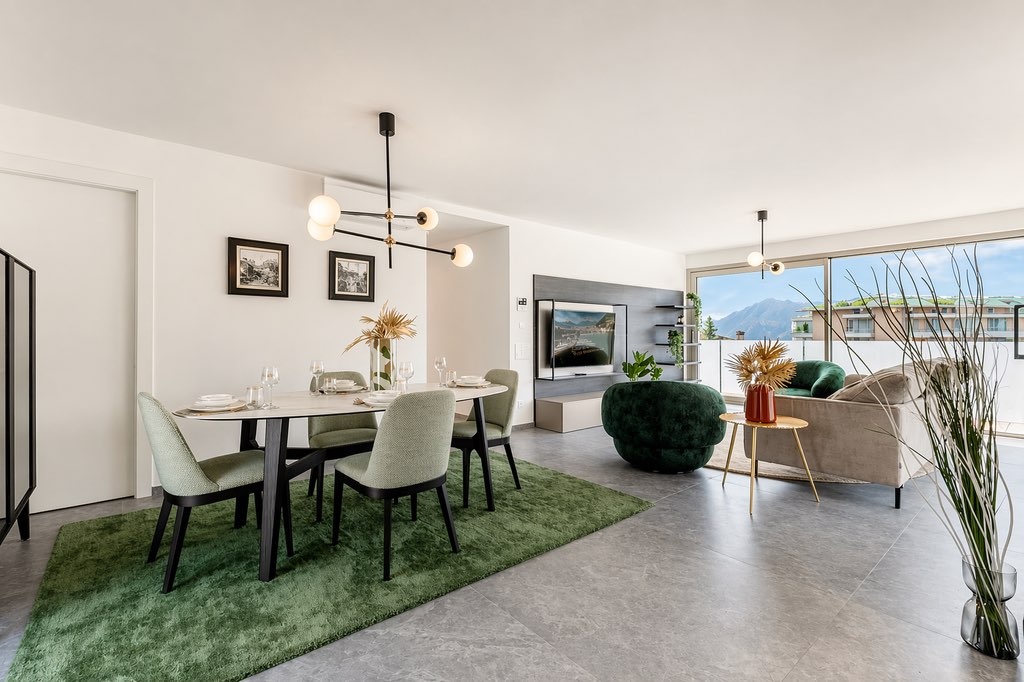 Controlled wide-angle: straight verticals, true volumes, no distorted zones in the frame
Correcting Distortion in Post-Production
Fixing wide-angle distortion is based on two complementary approaches:
Manually: Most editing software includes an objective correction profile that automatically straightens barrel distortion and vignetting based on the manufacturer's optical data. You then need to manually adjust vertical lines if the framing was not perfectly level.
With AI: The sublimation of the IACrea AI Photo App applies an automatic HDR effect and also seeks to straighten vertical lines, all without external editing software. It adjusts in one step the interior/window contrast, which is the most common flaw in real estate photos, but it does not replace an objective correction profile: for very pronounced wide-angle distortion, manual correction works better, and level framing remains the best guarantee against leaning walls. To go further on managing light and contrast, our real estate photography guide details the entire method.
Wide angle and AI: going beyond simple correction
Once the distortion is corrected, the wide-angle lens reveals another issue: it shows everything — including an empty, poorly furnished, or cluttered room, with even more clarity than a tight shot. That’s where virtual staging comes into play: starting from the same wide-angle photo, AI virtually furnishes or re-arranges the room so that every square meter captured by the lens contributes to enhancing the property's value rather than highlighting its flaws. Our comprehensive guide to virtual staging explains the step-by-step method.
For agents still debating whether to equip a dedicated camera or rely on a smartphone, our comparison smartphone vs. camera for real estate details the focus/quality compromises of each option. Check out our pricing options to integrate automatic correction and virtual staging into your photo workflow.
FAQ
What is the best focal length for real estate photography?
Between 16 mm and 24 mm in full-frame equivalent. This range captures an entire room from an angle that highlights the space without noticeably distorting it. Below 14 mm, barrel distortion becomes quite noticeable on straight lines (doors, windows, walls).
Why do wide-angle photos give a sense of distortion?
A wide-angle lens projects a broad field of view onto a flat sensor, which slightly bends straight lines toward the edges of the image — this is barrel distortion. The shorter the focal length, the more pronounced this effect is, especially on objects near the edge of the frame.
Should I avoid fisheye lenses in real estate photography?
Yes, in most cases. A fisheye lens (below 12-14 mm) visibly curves lines and exaggerates volumes to the point of creating a disconnect between the photo and the property's actual appearance — potentially leading to disappointment during visits and undermining buyer trust.
How can I correct barrel distortion in a wide-angle photo?
Distortion correction, including barrel distortion and vignetting, is done in post-production using editing software that applies the lens profile. On the AI side, the photo enhancement in IACrea automatically applies HDR effects and also aims to straighten verticals, without external software; however, it does not replace a dedicated lens profile correction.
Does a wide-angle really help sell a property faster?
Photos showing an entire room in a single shot generate more clicks and visit requests, as they provide a more complete view of the property right from the thumbnail. SeLoger has measured that an ad with quality photos can attract up to 7 times more visits than an ad with poor visuals.
Conclusion
The wide-angle lens remains the most effective tool for showcasing an entire room in a single shot — as long as you stay within the 16-24 mm range and systematically correct the distortion before publishing. Beyond that, it no longer enhances the property: it creates a mismatch between the promise of the listing and the reality of the visit.
The IACrea AI photo application automates this correction and prepares your photos directly for virtual home staging — allowing you to reap all the benefits of wide-angle shots without suffering from their flaws. Try it on your next listing.
About the author

Co-founder & CTO of IACrea
Constance Laborie is co-founder and CTO of IACrea, the AI platform that helps real estate professionals create their visuals — photos, virtual home staging and videos — in seconds. She leads the product and technical development of the platform and writes practical guides on real estate photography, virtual home staging and the use of AI in real estate.
Related articles
Ready to turn your photos into content that sells?
Join thousands of real estate agents using IACrea to create professional content in seconds.
Try for free →