
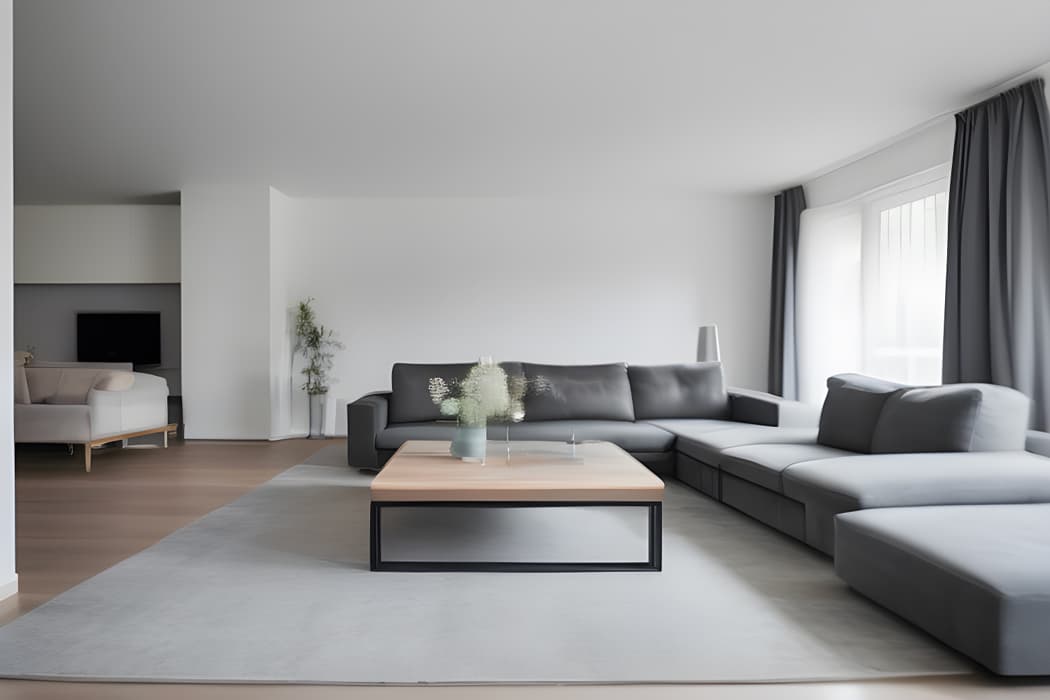
In 2026, the question arises in every real estate agent training session: "Is my iPhone enough or should I invest in a real camera?" The short answer: it depends. The detailed answer is in this guide.
Professional real estate photography has undergone a quiet revolution since 2023: high-end smartphones have caught up in part with dedicated devices, while AI-based image processing has blurred the lines even further. The result: the market is more segmented than ever, and the optimal equipment varies depending on your property volume, your budget, and the quality your clients expect.
What you will learn in this guide:
- What a 2026 smartphone can (and cannot) do in real estate photography
- When a hybrid or DSLR camera is really necessary
- A comparison of 7 criteria with a decision table
- How IACrea's AI reduces some gaps between the two types of equipment
- Our verdict by agent profile: who should invest in what
The Material Battle in 2026: Why the Debate Is Reignited
For a long time, the answer was clear: professional real estate photos required a DSLR with a wide-angle lens, period. Smartphones produced decent results for individuals, but not for agencies.
This consensus shattered between 2022 and 2026. Two main reasons: the sensors in smartphones greatly improved (50 to 200 Mpx in Apple, Samsung, and Huawei), and most importantly, AI software processing transformed raw sensor data into images that portals accept without hesitation.
Meanwhile, the camera market has shifted towards mirrorless hybrids, which are more compact and versatile than traditional DSLRs. The gap has narrowed, but it hasn't disappeared — and it's in the extreme cases that everything is decided.
What Portals Actually Accept
SeLoger, Leboncoin, and Bien'ici require photos to be at least 72 dpi with a width of 1,000 px. By 2026, smartphones typically produce images at 12-48 Mpx (roughly 4,000 to 8,000 px wide) — resolution is no longer the deciding factor.
What distinguishes a professional real estate photo from an unprocessed smartphone image is the handling of highlights (overexposed windows), the noise level in low light, and the distortion caused by wide-angle lenses. These three points truly determine the outcome of the duel.
What a smartphone can (really) do in 2026
Manufacturer marketing claims are often exaggerated, but the actual progress of smartphones in real estate photography is undeniable. Here's what the top models in 2026 actually enable.
Real advantages: portability, speed, and zero cost
A smartphone is always in your pocket. No need to carry a bag, mount lenses, or check batteries. For a real estate agent conducting 4 to 5 visits per day, this is a decisive advantage in terms of workflow fluidity.
It's immediately ready to use — no learning curve. And the additional cost is zero if you already own a recent smartphone. Economically, it's the optimal choice for agents starting out or managing a low volume of listings.
The true limitations: low light, wide-angle, and depth of field
Despite advances, smartphones still have three fundamental shortcomings in 2026:
Low light: Smartphone sensors, even at 200 MP, are physically small and capture less light per pixel than APS-C or full-frame sensors. A dark corridor, basement, or north-facing room will consistently generate more digital noise on a smartphone than on a mirrorless camera.
Fixed ultra-wide-angle: Smartphones offer multiple focal lengths, but the ultra-wide-angle (equivalent to 10-14 mm full-frame) remains exclusive to dedicated lenses. For small kitchens or narrow hallways, interchangeable lenses remain unrivaled.
Distortion: Smartphone software automatically corrects barrel distortion, but this digital correction causes a slight loss of resolution at the edges and sometimes results in artificially straightened perspectives that can look "off."
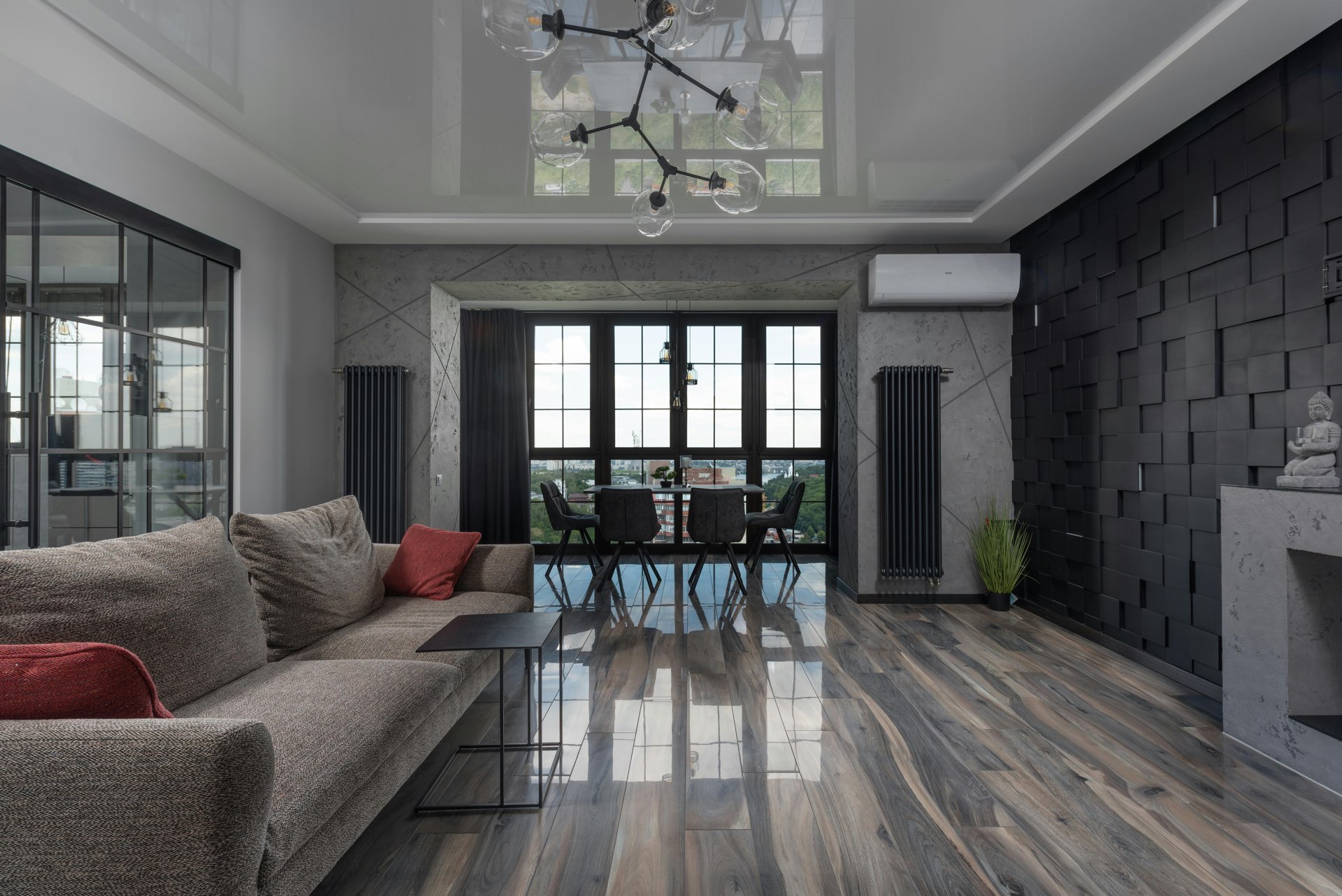
Typical example of the smartphone's main limitation: backlighting causes a window to be overexposed while the interior is underexposed simultaneously.
DSLR or mirrorless camera: when it makes all the difference
The physical sensor: the undeniable advantage
A APS-C mirrorless camera (Sony A6700, Fujifilm X-S20) features a sensor measuring 22 × 15 mm, compared to 7 × 5 mm for a smartphone. This difference in physical size directly results in:
- Greater dynamic range (ability to handle both very dark and very bright areas simultaneously)
- Significantly less noise in low light
- Controlled depth of field (useful for food photos with a sharp countertop and a slightly blurred background)
For luxury properties like a villa with a pool or an apartment with a clear view, these benefits are immediately noticeable — and expected by buyers in this segment.
The interchangeable wide-angle lens: pro’s #1 advantage
A Sigma 10-18 mm f/2.8 lens mounted on a Sony A6700 produces interior photos unmatched by smartphones. At 10 mm on APS-C (roughly equivalent to 15 mm full frame), it captures rooms that other focal lengths simply cannot fit into the frame — without visible distortion.
This is precisely where investing in a mirrorless camera becomes most justified for agents photographing small city-center apartments or tight open-plan spaces.
Mirrorless cameras in 2026: available from €800
Good news: an entry-level hybrid kit suitable for real estate is now available around €1,000-€1,500 (camera body + wide-angle lens). Sony, Fujifilm, Nikon, and Canon all offer viable options in this price range — about two to three times the cost of an annual subscription to an independent real estate photographer, but paid off in one season if the agent shoots their own properties.
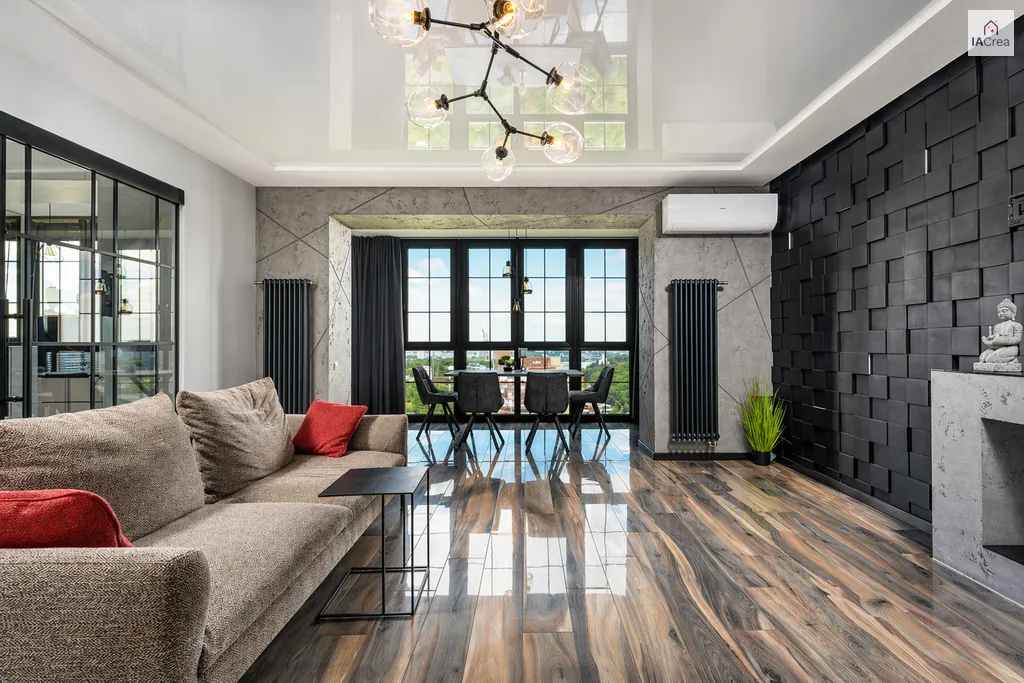 The same interior after automatic HDR processing by IACrea: the interior is properly exposed and the window remains readable.
Detailed Comparison: 7 Criteria to Decide
| Criterion | High-End Smartphone | Entry-Level APS-C Hybrid | Professional Full-Frame Hybrid |
|---|---|---|---|
| Resolution | 12–50 MP effective | 24–33 MP | 45–61 MP |
| Low Light Performance | Adequate (with AI) | Good | Excellent |
| Wide-Angle | Fixed (simulated) | Interchangeable (10–18 mm) | Interchangeable (16–24 mm FF) |
| HDR Management | Automatic AI (limited) | Bracketing + manual blending | Bracketing + high-quality blending |
| Portability | Always available | Requires camera bag | Heavy, bulky |
| Entry Cost | €0 (existing device) | €1,000–1,500 | €3,000–6,000 |
| Learning Curve | None | Moderate | Significant |
For standard properties (T2–T3 apartments, houses up to €300,000), a smartphone with AI processing covers 80 to 90% of needs. For premium properties (prestige, loft, villa, exceptional homes), the APS-C or full-frame hybrid becomes the expected standard.
How IACrea's AI Bridges the Gaps Between Equipment
This is where things have changed significantly since 2024. The AI image processing doesn't replace physical sensors but compensates for the most obvious shortcomings of smartphones in real-world conditions.
Automatic HDR: The feature that levels the quality
The main limitation of smartphones in real estate — managing overexposed windows — is precisely the problem that the IACrea real estate photo app automatically solves.
The app starts with a single photo and applies an HDR effect via AI in just a few seconds. The result: the interior is properly exposed AND the window remains visible — without manual bracketing, without fusion software on a computer. Professional photographers aim for the same balance by merging multiple exposures, known as "HDR" (High Dynamic Range); the HDR effect is applied automatically without any technical manipulation on your part.
In tests conducted with IACrea on bright apartments, the results are often indistinguishable from images taken with a hybrid camera — for most common use cases. Check out our dedicated guide on real estate HDR photography for technical details.
What AI cannot replace
Let’s be clear: IACrea's AI significantly improves smartphone photo quality but does not create wide-angle views where none exist. A corridor that's 1.20 meters wide photographed with a smartphone will still look narrow — no AI processing can invent pixels that represent an unexisting field of view.
Similarly, managing depth of field (the "bokeh" effect of a blurry background behind a sharp element) remains the domain of the physical large sensor, even as smartphones increasingly simulate this effect convincingly.
To deepen your understanding of shooting techniques regardless of your equipment, consult our comprehensive guide to professional real estate photography.
Which profile chooses what in 2026?
There is no one-size-fits-all answer. Here is our analysis by profile:
Beginner broker or agent with < 20 properties/year
Recommendation: smartphone + IACrea
The ROI of a hybrid camera is hard to achieve with fewer than 20 properties per year. An iPhone 16 Pro, a Samsung Galaxy S25 Ultra, or a Google Pixel 9 Pro, combined with the IACrea app for automatic HDR processing, deliver results that are more than sufficient for standard properties.
Savings: €1,000 to €1,500 in hardware investment, with no learning curve. These savings can cover several months of IACrea subscription — including virtual home staging. Check out our pricing to find the plans suited for you.
Active agent with 30 to 60 properties/year
Recommendation: entry-level APS-C hybrid (€1,000–€1,500)
At this volume, the hybrid pays for itself within 6 to 12 months. The interchangeable wide-angle lens makes a real difference for small spaces, and improved low-light performance reduces post-processing time. A Sony A6700 with Sigma 10-18 mm f/2.8 is the setup many active agents adopted in 2025-2026.
Independent real estate photographer or prestige property agent
Recommendation: full-frame hybrid (Sony A7C II, Nikon Z6 III)
When your clientele is in the luxury segment or you position yourself as a real estate photography service provider, full-frame is no longer optional — it’s an expected standard. The quality difference is visibly noticeable on large bright rooms, and high-end clients are particularly sensitive to it.
Recommended Workflow Based on the Chosen Equipment
No matter what equipment you use, the optimal workflow for professional real estate photos remains roughly the same:
- Property Preparation: tidying up, opening shutters and curtains, turning off lamps to let natural light dominate (artificial lighting creates orange hues)
- Tripod at 1.20 m: maintaining a consistent height between rooms, guaranteed verticals
- Lighting balance (HDR): automatic HDR effect on IACrea (smartphone) or manual bracketing (camera)
- AI Processing: IACrea for smartphones, Lightroom + plugins for hybrids
- Selecting the 8 to 12 best photos: living room, kitchen, master bedroom(s), bathroom, exterior
- Virtual home staging if needed: for empty properties, adding the virtual home staging via IACrea increases the appeal of the listing in just a few minutes
For a comparison of specific smartphone settings, check out our guide real estate photos with smartphone.
FAQ
Can a 2026 smartphone truly take professional-quality real estate photos?
Yes, for most standard properties. Premium smartphones in 2025-2026 feature 50 to 200 Mpx sensors, advanced computational HDR, and optical stabilization that produce results suitable for publication on SeLoger and Leboncoin. Persistent limitations — extreme low light, interchangeable wide-angle lenses, controlled depth of field — remain exclusive to dedicated devices. But for 80% of agents managing standard properties, a good smartphone paired with IACrea's AI is more than enough.
Which camera should I choose to start in real estate photography?
Begin with a low-end mirrorless camera (Sony A6700, Fujifilm X-S20) with a 10-18 mm wide-angle lens, offering the best value for around €1,000–€1,500. If budget is tighter, an iPhone 15 Pro or a Samsung S24 Ultra combined with the IACrea app for automatic HDR processing is a very viable alternative for agents with a moderate volume of properties.
Is investing in a mirrorless camera worthwhile compared to an iPhone for real estate?
It depends on your volume. Under 20–30 properties per year, the ROI for a mirrorless camera is hard to justify — a smartphone with AI provides sufficient results. Beyond that, a mirrorless camera pays for itself in a few months thanks to interchangeable wide-angle lenses, better low-light performance, and time saved in post-processing. Independent photographers switching to mirrorless often see an average 30% reduction in editing time.
What’s the difference between DSLR and mirrorless cameras for real estate photography?
By 2026, mirrorless cameras have largely replaced DSLRs in real estate. They are more compact, quiet, offer real-time autofocus on the screen, and support lens adaptation via mount rings. DSLRs still have an edge in battery life, but their optical viewfinder and mirror box make them less suitable for indoor tripod work. The shift to mirrorless is now definitive in the industry.
How can I improve my real estate photos without changing equipment?
The three most impactful tips without new gear are: 1) Use the IACrea app to enable automatic HDR to balance interior and exterior shots in a single capture. 2) Always shoot in natural light (uncovered windows, open curtains), avoiding turned-on lights that cast orange tones. 3) Always work with a tripod at about 1.20 meters height for straight verticals and perfect focus. These three adjustments often yield more improvement than a new device.
Conclusion
By 2026, the line between smartphones and dedicated cameras is no longer as clear-cut as it once was. For real estate agents just starting out or managing a moderate number of properties, a recent smartphone paired with IACrea's automatic HDR processing delivers competitive listing photos — with no additional investment.
For active agents handling over 30 properties a year or targeting the luxury segment, the APS-C hybrid remains the standard that makes a difference in small spaces and low light conditions.
In any case, the best equipment is the one you master and use consistently. Try the IACrea app for free — and see for yourself what AI can do with your current photos, regardless of your device.
About the author

Co-founder & CEO of IACrea
Pauline Clavelloux is co-founder and CEO of IACrea. In daily contact with real estate agencies and agents, she understands their challenges around visibility, marketing and lead generation. On the blog, she shares actionable strategies on real estate marketing, social media and prospecting in the age of AI.
Related articles
Ready to turn your photos into content that sells?
Join thousands of real estate agents using IACrea to create professional content in seconds.
Try for free →